Ask most travelers to name a bucket-list destination in South Asia, and Bangladesh rarely comes up. It sits quietly between the well-worn paths to India and Southeast Asia, overlooked by guidebooks and overshadowed by louder neighbors. And yet, for anyone who actually makes the trip, Bangladesh has a way of rearranging what you thought travel could look like — a country stitched together by rivers, wrapped in mist-covered hills, and home to landscapes that feel like they belong to no other place on earth.
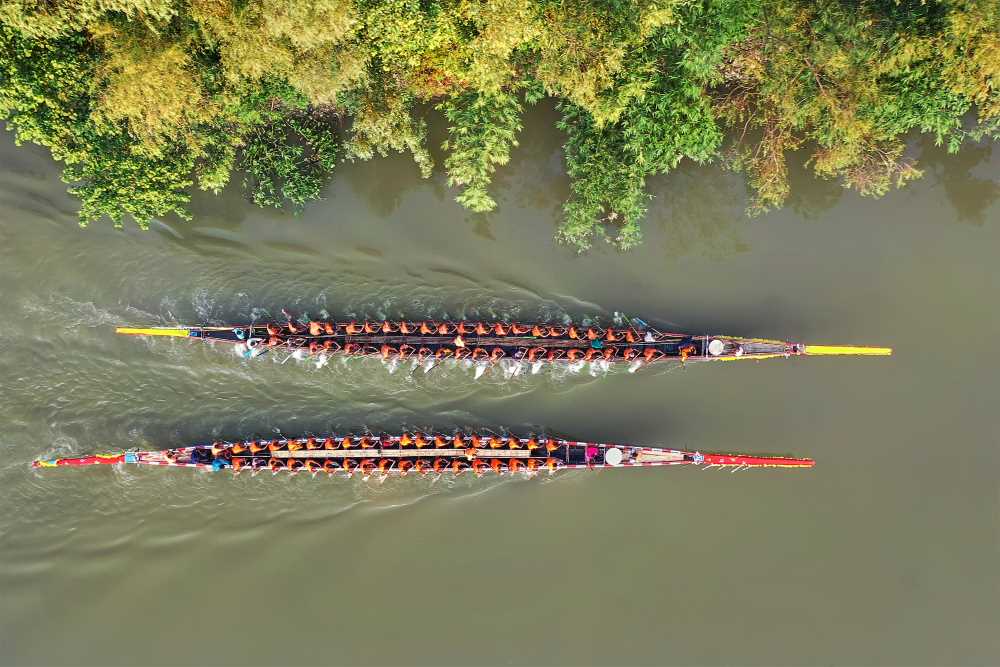
This is a country built on water. More than 700 rivers cut through it, and daily life bends around them — fishermen casting nets at dawn, wooden boats ferrying entire villages, children swimming in channels that double as highways during the monsoon. Photographing Bangladesh means photographing that relationship with water, again and again, in a thousand different forms.
The Sundarbans
No list of Bangladesh's beauty starts anywhere but here. The Sundarbans is the largest mangrove forest on Earth, a UNESCO World Heritage Site that spreads across the delta where the Ganges, Brahmaputra, and Meghna rivers finally meet the Bay of Bengal. It is also the last stronghold of the Royal Bengal Tiger in the wild — though sightings are rare, and rightly so; this is their territory, not ours.
What you will see, almost guaranteed, is a landscape unlike anywhere else you've photographed. Boats moving silently through narrow channels at sunrise, mist lifting off water so still it mirrors the mangroves perfectly, and a scale of wilderness that makes you feel appropriately small. Cyclone Sidr and Cyclone Aila both tore through this region in the past two decades, and the villages along its edge have rebuilt themselves around the water rather than against it — a resilience that shows up in every frame.
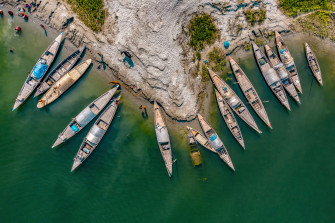
Boats moored along a quiet channel in the Sundarbans.
Old Dhaka
If the Sundarbans is Bangladesh's wilderness, Old Dhaka is its beating, chaotic heart. Founded over 400 years ago, the old quarter of the capital is a maze of narrow lanes, Mughal-era mosques, riverside ghats, and markets that have operated in the same spots for generations. It is, by most measures, one of the most densely packed urban spaces on the planet — and that density is exactly what makes it extraordinary to photograph.
Spice merchants weigh cardamom by hand next to rickshaw painters finishing intricate floral designs. Boat traffic on the Buriganga River never really stops. Step into a spring and hardware shop tucked between two centuries-old buildings, and you'll find scenes that haven't changed much since your grandparents' generation — not staged for tourists, simply going on with the business of the day.
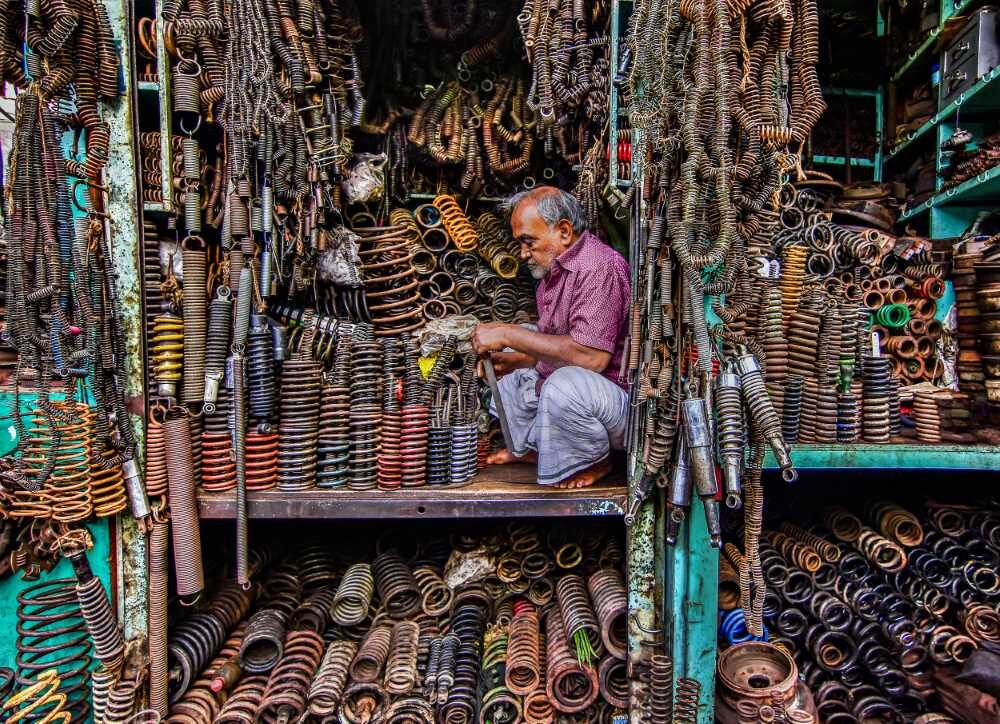
A spring and hardware shop in Old Dhaka's narrow lanes.
Cox's Bazar
At 120 kilometers, Cox's Bazar holds the record for the world's longest unbroken natural sea beach. Unlike the manicured resort beaches found elsewhere in Asia, this one still feels lived-in and real — fishing boats painted in impossibly bright colors line the shore, and the beach itself functions as a genuine gathering place for the whole region, not just a backdrop for tourism.
Sunrise and sunset here are the whole point. The light stretches long and gold across the sand, and the fishing fleet heading out or coming back in gives every frame a sense of motion and purpose that an empty beach never could.
Sylhet and the Tea Gardens
Head northeast and the landscape changes entirely. Sylhet's rolling hills are blanketed in tea gardens — neat, impossibly green rows that climb and fall with the terrain, worked by hand the same way they have been for well over a century. Mist tends to settle into the valleys here in the early morning, and the light that filters through it has a softness that's hard to find anywhere else in the country.
Nearby, Srimangal — known locally as the tea capital of Bangladesh — adds pineapple and lemon plantations into the mix, along with some of the last remaining patches of lowland rainforest in the region. It's slower here, quieter, and a genuine change of pace from the density of Dhaka or the scale of the Sundarbans.
The Hill Tracts: Bandarban and Rangamati
Bangladesh's southeast corner holds something most visitors never expect: real mountains, indigenous hill communities with their own distinct cultures and languages, and Kaptai Lake — a vast, human-made lake dotted with small islands and floating villages. Bandarban and Rangamati are less visited than anywhere else on this list, which means the pace of life here is entirely unhurried and the welcome, when you do arrive, tends to be genuine rather than rehearsed.
Golden Harvest Season
Timing matters everywhere, but nowhere more than in rural Bangladesh during harvest season. Mustard fields turn entire stretches of countryside a deep, saturated yellow. Rice paddies ripen to gold. Farmers work the fields with water buffalo the same way they have for generations, and village life slows down just enough to let you actually see it, rather than just pass through it.
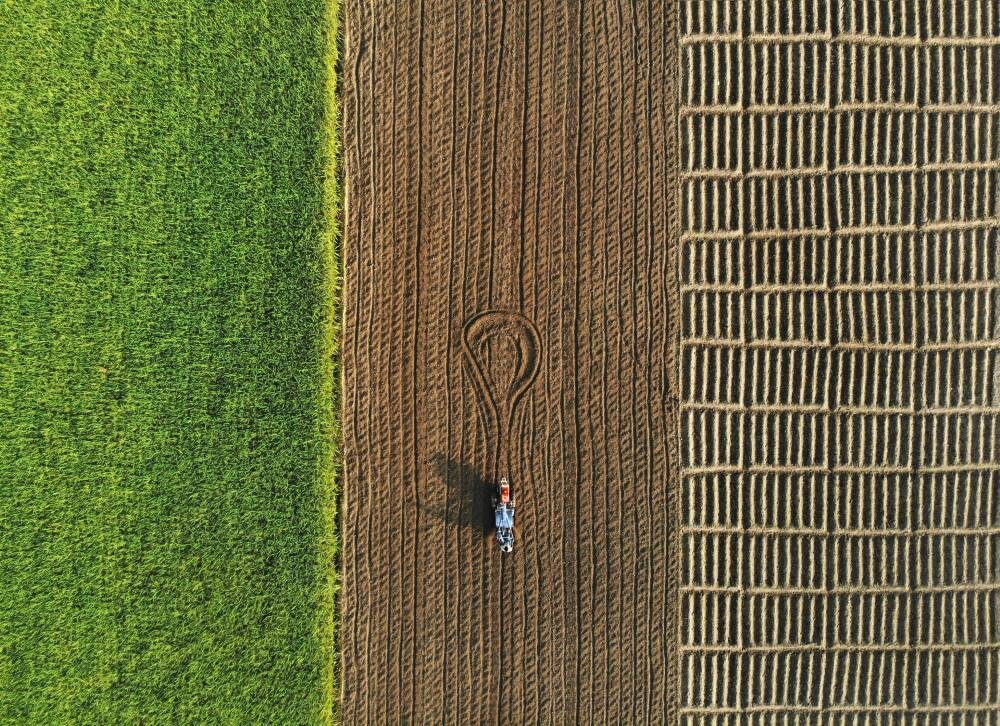
A farmer walking through rice fields during harvest season.
Why See It Through a Lens
Bangladesh doesn't reward a rushed itinerary. The country's real beauty tends to live in the details — the exact hour the light turns gold over a rice paddy, the specific bend in a river where the fishing boats gather, the particular corner of Old Dhaka where the afternoon crowd thins out just enough to actually see the architecture. That's the difference between passing through a place and actually photographing it.
It's also why a private, photography-focused tour changes the experience so completely. Instead of a fixed bus schedule dictating where you stand and for how long, the itinerary bends around the light and the story — arriving at the Sundarbans before sunrise instead of mid-morning, staying in Old Dhaka's markets until the crowd and the light align, waiting the extra twenty minutes in Sylhet for the mist to lift just right.
Bangladesh has been hiding in plain sight for a long time. For anyone willing to actually look — camera in hand, on its own unhurried schedule — it has more to offer than almost anywhere else in the region.